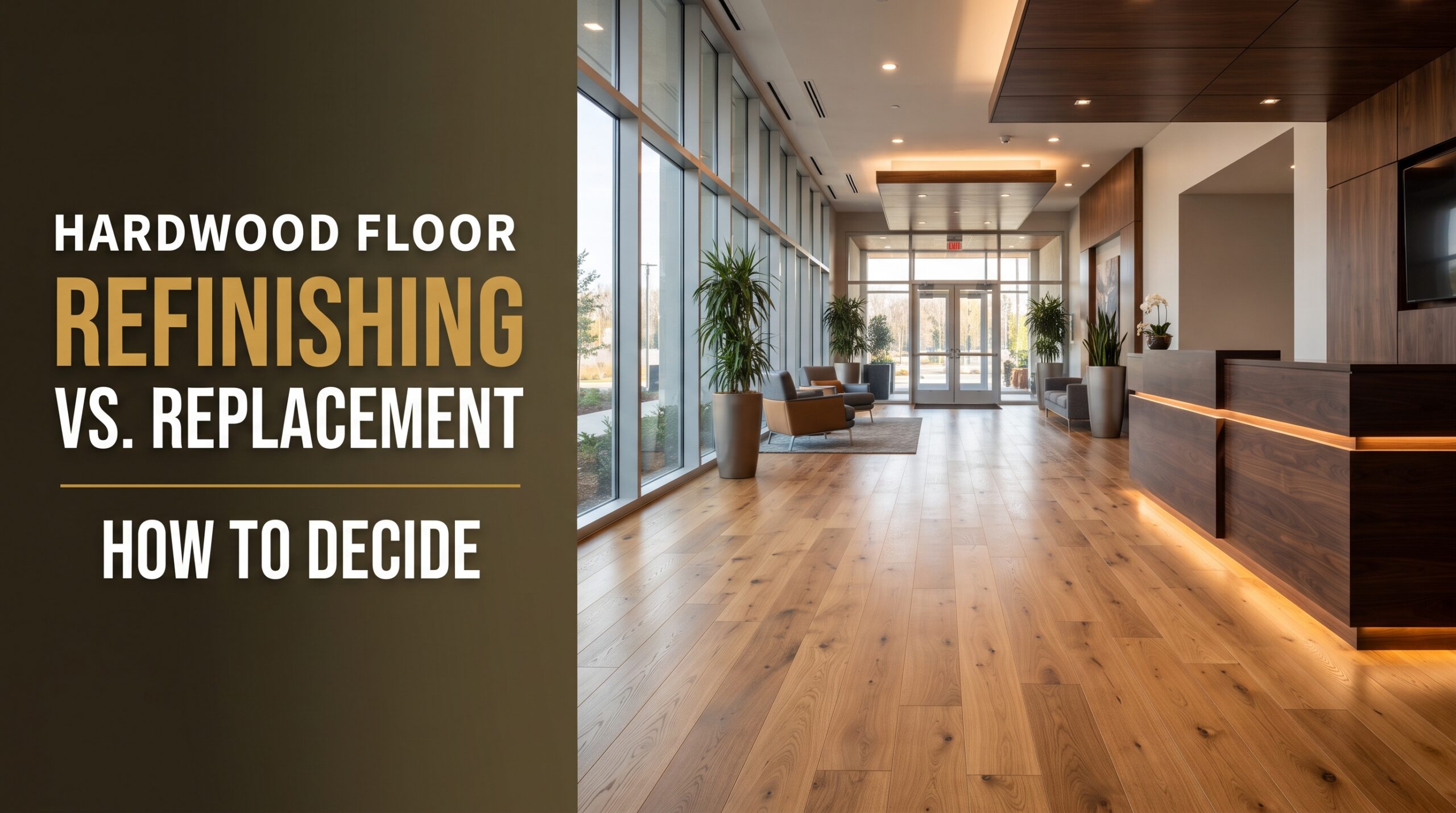
After years of people walking across the same floor, those scratches start standing out more and more, especially in bright morning light. Once that happens, the choice between hardwood floor refinishing and replacement stops being generic and comes down to specifics. Refinishing is usually the less expensive and faster option, while replacing the floor can take considerably longer. Neither one makes sense for every situation.
It all comes down to what’s happening under the finish. Not what the floor looks like on a random Tuesday.
Signs a Refinish Might Be All You Need
Most tired floors aren’t damaged. They’re just dull. Scratches on the surface. Faded color near a window. A worn path where the family walks the same six feet every day. That’s cosmetic wear sitting on solid wood, and it sands right off.
Knowing when to refinish vs replace hardwood floors usually comes down to one quick test. Press a coin into the wood near a doorway. Springs back? Plenty of wood left. Stays dented? That’s a different conversation.
Signs You Actually Need New Floors
Some floor damage is simply too deep for sanding to handle. Water stains may have penetrated several boards instead of staying on the surface. Boards can keep cupping even after the seasons change. And if the floor has already been sanded four or five times, there may not be enough wood left for another pass.
These are the real signs you need new hardwood floors. Worth catching early, too. Sand a floor once too often and the nail heads show through. At that point, there’s no more sanding. Just replacing.
What Refinishing and Replacement Actually Cost
Budget usually decides this, and it should. Run a refinishing vs replacement cost comparison and refinishing wins most of the time by a wide margin. The wood stays. The subfloor stays. The layout stays. Replacement adds material costs, disposal, and often subfloor work refinishing never touches at all.
Timing matters just as much, whether you’re a homeowner or trying to keep a jobsite running. A typical refinishing cost and timeline for an average room usually means a few days from the first sanding to the final coat. Replacement takes longer because you also have to account for ordering the material, letting it acclimate, and completing the installation.
Residential Projects Bring Their Own Considerations
A homeowner staring at scratched floors in a hundred-year-old house isn’t solving the same problem as a property manager with five buildings. Species matters more here. Matching old wood to new matters even more, especially in a house with flooring nobody makes anymore.
Custom hardwood restoration for residential floors can involve more than simple refinishing. When certain boards are too damaged to sand, they can be easily replaced and removed with matching wood, then the entire floor is finished together so everything looks consistent.
Denver’s dry air and big seasonal swings add another wrinkle. Wood moves more here than people expect. Hardwood floor refinishing that Denver homeowners request often starts with checking for gaps or cupping tied straight to that seasonal shift, before a single sander gets plugged in.
Commercial Projects Run on a Different Clock
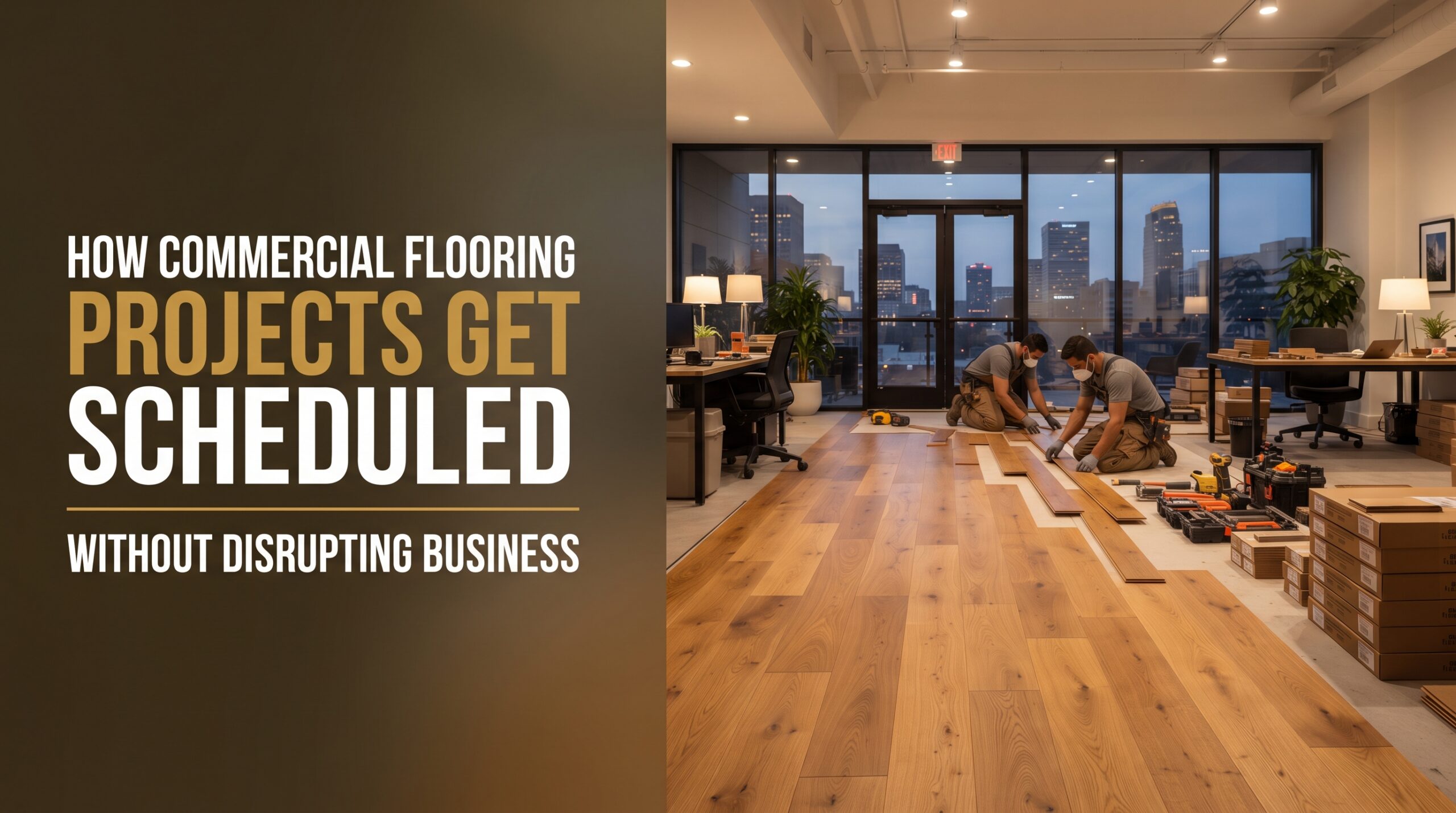
Commercial flooring gets far more complicated as the project scales up. A ten thousand square foot lobby cannot be managed with the same assumptions a homeowner might get away with. Scheduling, code requirements, and keeping tenants up and running all become more important than how the floor looks.
Large-scale commercial flooring restoration almost always needs a phased plan, section by section, so the building stays partly open instead of shutting down completely.
That phased approach is exactly where commercial hardwood floor restoration earns its place over a full tear-out. Work moves floor by floor. The retail space or office stays open for business the whole time.
For owners running several buildings across the Front Range, hardwood floor restoration in Denver means coordinating tenant schedules and business hours just as closely as the sanding itself.
Making the Final Call
You can narrow the decision down by looking at three things. First, figure out how far the damage actually goes. Then consider what the budget can realistically handle. Finally, think about how much time you have before the space needs to be back in use. Once those answers are clear, the choice gets a lot easier.
Conclusion
The choice between refinishing and replacing comes down to the condition of the floor. A worn surface on solid hardwood can often be restored with refinishing. Boards with major damage or too little wood remaining after previous sanding usually need to be replaced. Getting that decision right from the beginning can save a lot of time and expense, whether the project is small or covers an entire commercial property.
Ready to Get a Straight Answer?
2nd Gen Hardwood can tell you in one visit whether your floors need a refinish or a full replacement, for homes and commercial spaces across Denver and the Front Range. Contact us for an honest look and a clear quote before spending a dollar guessing.
Frequently Asked Question
How do I know if my hardwood floors need replacing or refinishing?
One quick way to check is to press a coin into the wood near a doorway. If the surface recovers from the pressure, refinishing will often do the job. If the dent remains or the floor has major water damage, warped boards, or nail heads showing, replacing it may be the better route.
Is it more cost-effective to replace or refinish hardwood floors?
Refinishing is usually much less expensive than replacing the floor. You keep the existing boards, subfloor, and layout, so the main costs are sanding and applying a new finish instead of buying new flooring and paying for installation.
How many times can hardwood floors be refinished?
Solid hardwood can usually be refinished around four to five times, although it depends on how thick the boards are and how much wood was removed during previous sanding. Once the boards become too thin, another sanding can expose the nails.
For commercial hardwood floor refinishing vs replacement cost, which makes more sense for a large space?
Refinishing almost always wins on cost for large commercial floors, especially when the wood underneath is still solid. Replacement only makes sense once damage runs deep or the flooring’s been sanded past its limit.
For hardwood floor refinishing vs replacement in Denver homes, does the local climate change the decision?
It can. Denver’s dry winters and seasonal humidity swings cause more gapping and cupping than steadier climates, so a floor here might need a closer look before deciding between the two options.