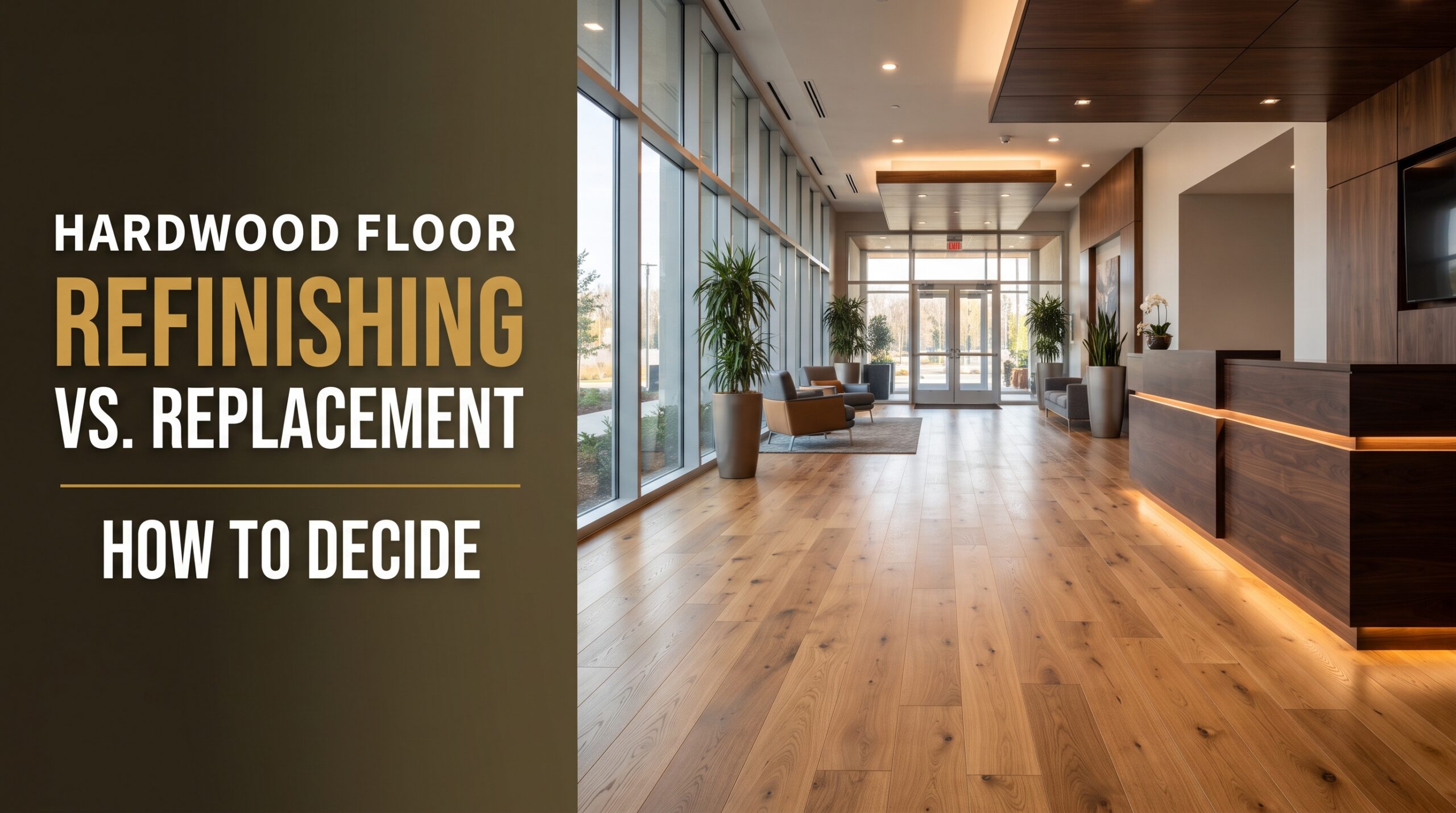
If the flooring crew does its job well, most people in the building won’t know they were there. At 2am, when the building sits empty, commercial flooring installation scheduling has crews removing worn flooring, prepping the surface, and installing new material, while the rest of the building is empty. By the time staff arrive and the coffee starts brewing, the work area is ready for another business day. Retail spaces, offices, and hotel lobbies can’t always afford a long shutdown, so the installation has to fit around normal activity instead of interrupting it.
Why Timing Is the Real Challenge in Commercial Flooring
The process starts well before the first piece of flooring comes up. A contractor should walk through the space, identify the areas the business depends on most, such as reception areas, checkout counters, and server rooms, and separate them from spaces that can be taken offline temporarily. Some projects can be completed over a single weekend. Others require evening work spread over several months or take advantage of slower seasons. Either way, a dependable commercial flooring project timeline is based on how the building operates, not simply on what works best for the installation crew.
Commercial flooring built for scale just means the staffing and material staging are sized to match the building, not forced into some generic plan.
Commercial flooring built for scale means the staffing and material staging are sized to match the building, not forced into some generic plan.Instead of forcing the building to match some generic plan. A 10,000 square foot suite and a 150,000 square foot mixed use development need completely different setups. Same product, different math entirely.
Working Around Occupied Space
Working in an occupied building changes the job completely. Now you’re dealing with dust control, limits on when noisy work can happen, which entrances need to stay closed, and which elevators the crew can use. You also have to think about ventilation. Adhesive fumes shouldn’t end up getting pulled through an HVAC intake and carried into the floor above. A flooring contractor for occupied commercial space needs to account for those details before materials even arrive, rather than waiting for a tenant to raise a problem.
Scheduling around occupied office and retail spaces isn’t an extra item to figure out later. It should be one of the first things built into the schedule. Get it wrong and you could end up closing a storefront, dealing with an unhappy property manager, or running into a compliance problem that could have been avoided.
Night and Weekend Work Keeps Doors Open
Most jobs solve this with night and weekend commercial flooring installation. Crews show up after the last person clocks out, work through the dark hours, and clear out before the first badge swipe the next morning.It costs more per hour. There’s no way around that. Night differentials and weekend rates aren’t cheap. But when a business can’t eat the downtime, it’s really the only move that works.
Phasing the Project Floor by Floor, Zone by Zone
Bigger buildings get divided for phased flooring installation for offices, one wing going down at a time instead of everything at once. One section goes down while the rest of the building keeps running like normal. Then the crew shifts over. Slower on paper. In real life it’s the difference between a business that stays open and one that doesn’t.
GC-friendly scheduling and site supervision becomes especially important on phased projects. A GC is usually coordinating several other trades at the same time, so the flooring crew needs to arrive when scheduled, finish its work within the allotted window, and clear out on time. Otherwise, the next trade is left waiting and the whole schedule can start slipping.
What GCs and Property Managers Should Ask Before Signing a Schedule
It’s worth slowing down before the schedule gets signed and asking how the job will actually be run. For evening or weekend work, find out who is responsible on site. Is there a supervisor there, or is the installation crew expected to make decisions on its own? Then ask about delays. If a phase runs over its allotted time, what keeps that work from spilling into occupied hours and surprising tenants? The same goes for dust and noise. When active tenant areas are close by, you need to know what will be done to keep those disruptions under control. Materials can also cause problems, so make sure there is a contingency plan for late deliveries or products that don’t match the approved sample. At the end of each phase, there should be a proper walkthrough and punch list before the crew packs up and moves on.
A contractor who answers all of that without blinking has done this before. One who shrugs hasn’t.
Building Trust Through Reliable Scheduling
Trust in this line of work gets built one finished phase at a time, not through a sales pitch. Why GCs trust our scheduling reliability usually comes down to something almost boring, showing up when promised, leaving the site the way it was found.
That’s really the whole idea behind commercial flooring installation without business disruption. No trick to it. Just realistic timelines, careful staging, and a crew that gets that people are trying to run a business right on top of, or right next to, the work.
Conclusion
Scheduling a commercial flooring project isn’t really a race against the clock. It comes down to working around how the building actually operates, from business hours and daily foot traffic to slower times of the year. When the timing is handled well, tenants may hardly notice the work beyond the new floor beneath them. Poor planning, though, can lead to lost business hours, frustrated customers, and unnecessary costs. In most cases, the outcome comes down to what was planned before the first tile was ever removed.
Ready to Schedule a Flooring Project Your Business Can Actually Live With?
Got a commercial flooring project that can’t afford downtime? 2nd Gen Hardwood has spent years scheduling large scale installations around businesses that never stop running, across the Denver Front Range. Contact us and let’s build a schedule around how your building actually operates, not the other way around.
Frequently Asked Questions
How far in advance should commercial flooring scheduling start?
A lead time of four to eight weeks is usually a good starting point. It allows time to complete permits, secure flooring materials and build a schedule that does not interfere too heavily with business operations.
Can flooring go in without closing the business?
Yes, in most situations. Weekend work, nighttime installation and phased projects can reduce disruption and allow you to keep much of the business open during construction.
How long does a phased commercial flooring project take?
It depends on the square footage and how many zones are involved, but phased work often runs several weeks longer than one continuous install.
Is night work more expensive than daytime installation?
Usually, because of labor differentials. Often it still saves more in avoided downtime than it costs in labor.
What flooring holds up best in occupied commercial spaces?
Low VOC finishes with faster cure times tend to work best. Less fume exposure and a shorter wait before the space reopens.