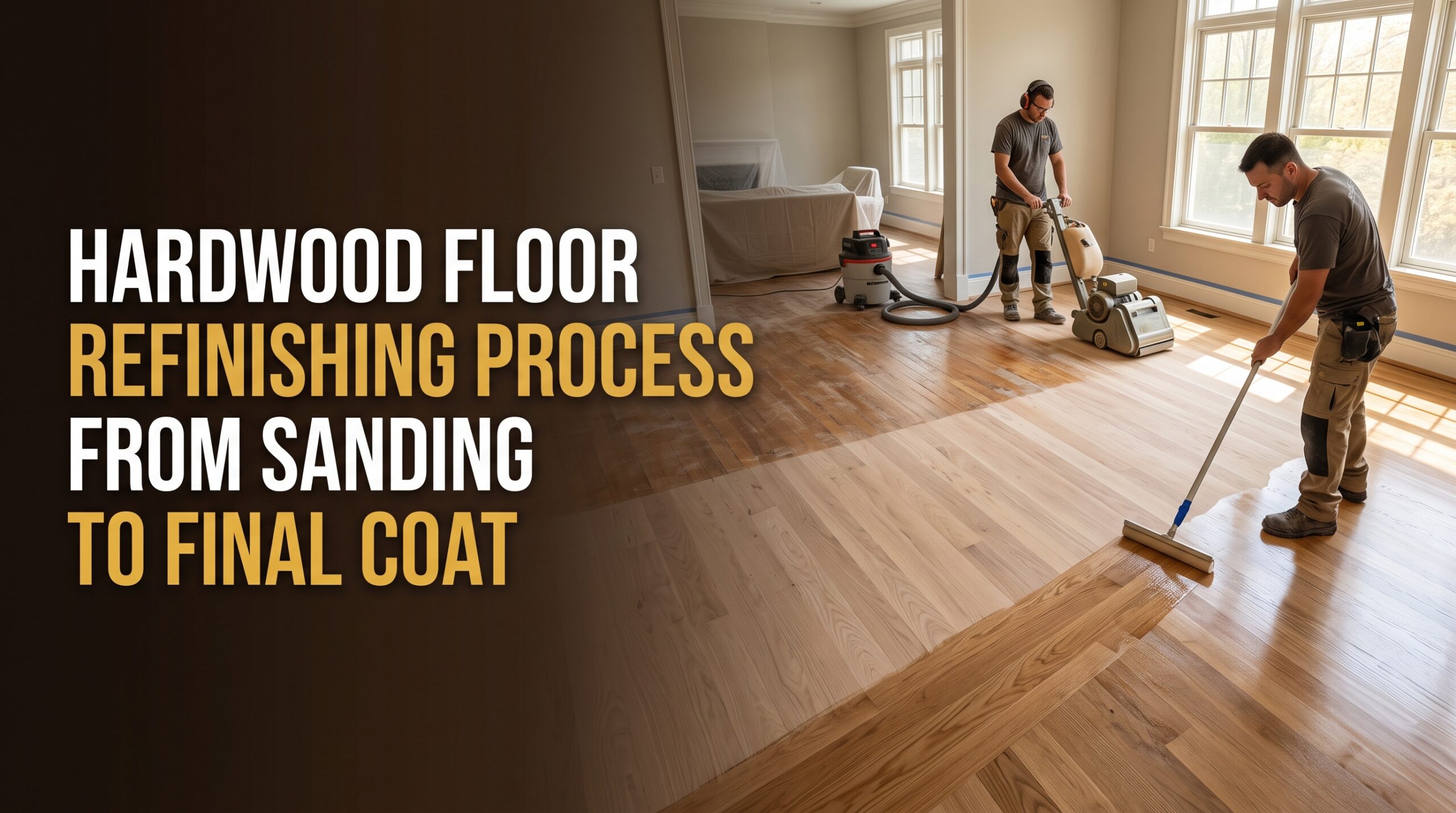
Refinishing an old hardwood floor involves careful preparation, sanding, and the application of a new protective finish. The hardwood floor refinishing process follows a sequence, and each stage affects the final appearance and durability. Professional dust-control equipment can reduce airborne dust, but refinishing is not completely dust-free.
Understanding the hardwood refinishing steps helps you compare contractor estimates and plan for downtime. A contractor typically inspects and prepares the floor, sands away the existing finish, addresses suitable repairs, applies stain if desired, and then adds the specified finish coats. The floor must dry between coats and reach an appropriate level of cure before normal use resumes.
Step One: Inspect and Prep
Before sanding, confirm the flooring type and whether enough usable wood remains for refinishing. Some engineered hardwood products have thin wear layers that cannot safely be sanded. Inspect for loose boards, protruding fasteners, moisture problems, and damage requiring repair. Clear the room, protect adjacent spaces, and plan dust containment and ventilation according to the products and equipment being used.
Step Two: Sanding
Sanding normally progresses through several abrasive grits to remove the existing finish and smooth the surface. The starting and finishing grits depend on the wood species, floor condition, and finish system; a common sequence might include coarse, medium, and finer abrasives. The contractor should follow the equipment and finish manufacturers’ recommendations rather than relying on one grit sequence for every floor.
Large floor sanders cover open areas, while edging equipment handles the perimeter and other confined spaces. Vacuuming between passes helps prevent loose grit from scratching the wood. The sanding technique and final abrasive selection should suit the flooring and planned finish.
This is where experience really matters. Leaving a drum sander in one spot for too long can gouge the wood in seconds, while swirl marks and areas where too much wood has been sanded away can be difficult to fix. That’s why many owners hire professional hardwood refinishing contractors instead of renting a machine. An uneven sanding job may require extensive corrective work.
Step Three: Repairs and Stain
After sanding, the contractor assesses gaps, nail holes, and damaged boards. Some small defects can be filled, but seasonal movement gaps or significant damage may need another approach. If staining is desired, test the color on the actual floor or a representative sample because wood species and preparation affect the result. Allow the stain to dry according to its product instructions before applying a compatible finish.
Step Four: The Finish
Hardwood floors may be finished with water-based polyurethane, oil-based polyurethane, or other compatible professional coating systems. Water-based products often have lower odor and may dry faster, while many oil-based products add a warmer amber tone. The number of coats, abrasion between coats, ventilation, and drying times depend on the selected system. Follow the manufacturer’s instructions and applicable safety requirements.
Step Five: Curing
A finish that feels dry may not be fully cured. Light foot traffic, furniture replacement, rugs, and normal cleaning may each have different waiting periods. Some systems allow limited use relatively quickly, while others need much longer to reach full cure. Ask the contractor for written, product-specific return-to-service instructions, protect the floor from abrasion, and lift furniture rather than dragging it.
How Long Does It Take?
Project duration depends on floor area, repairs, stain selection, finish chemistry, humidity, ventilation, and the required number of coats. Sanding and coating may take several days, with additional time before furniture, rugs, or regular traffic can return. Get a schedule that separates installation time, dry-to-recoat intervals, and final curing rather than assuming the entire process is complete when the last coat is applied.
Planning Large Projects
Offices, hotels, and retail stores can’t always afford to close for an entire week. That’s where hardwood floor refinishing services can help by planning the work around normal business hours. The crew may divide the building into sections and work after hours to keep disruption to a minimum. Dust barriers help protect areas that aren’t being refinished, and the schedule accounts for the time each section needs to cure. Good planning helps businesses stay organized while keeping tenants and visitors safe.
When Refinishing Isn’t Enough
Sanding and refinishing can make an old floor look much better, but they won’t solve every problem. Deep gouges, severe pet stains, and water-damaged boards may still show after the work is finished. Engineered flooring needs particular care because the real wood layer on top may not be thick enough for sanding. Solid hardwood can also be sanded only a limited number of times because material is removed during each pass. If the damage goes too deep, compare hardwood refinishing vs replacement before committing to the work. For floors with only minor surface wear, a screen and recoat may restore the finish without sanding all the way down to bare wood.
What a Good Quote Covers
A complete estimate should describe the full scope of the job. Check that it includes the sanding process, repairs, stain, finish type, number of coats, dust-control plan, schedule, and curing instructions. If anything is missing or unclear, ask the contractor to explain it before you approve the quote. Detailed estimates make it easier to compare bids fairly and reduce the chance of surprise charges.
Frequently Asked Questions
How many times can hardwood be refinished?
Solid hardwood can often be refinished multiple times, but the number depends on remaining wood thickness, previous sanding, and floor condition. Engineered hardwood may allow limited refinishing or none at all, depending on its wear layer and manufacturer guidance.
Do I have to stain my floor?
No. Staining is optional. You can keep the wood’s natural color and apply a clear finish instead.
How long before I can walk on a refinished floor?
The waiting period depends on the finish system and conditions. Follow the contractor’s written instructions for light foot traffic rather than assuming every floor is ready after one or two days.
When can I move furniture back?
Furniture return times vary by finish. Follow product-specific guidance, use protective pads, and avoid placing rugs until the coating manufacturer permits it.
Is screen and recoat the same as refinishing?
No. A screen and recoat lightly abrades a compatible existing finish before a new coat is applied; it does not remove the entire finish or correct deep scratches, stains, or damaged boards.
Conclusion
Refinishing works best when you understand the process and give each stage enough time. Prepare the room carefully, sand evenly, test the stain first, apply finish coats according to the product instructions, and allow the floor to cure properly. If you’re ready to compare project scopes and schedules, request a hardwood refinishing estimate that clearly outlines every stage of the work.
Ready to Refinish Your Floors?
Contact us at 2nd Gen Hardwood to discuss your floors, timeline, and finish options. Whether you’re refinishing a single home or a multistory commercial building in Denver or elsewhere along the Front Range, we’ll help you plan the project properly.